
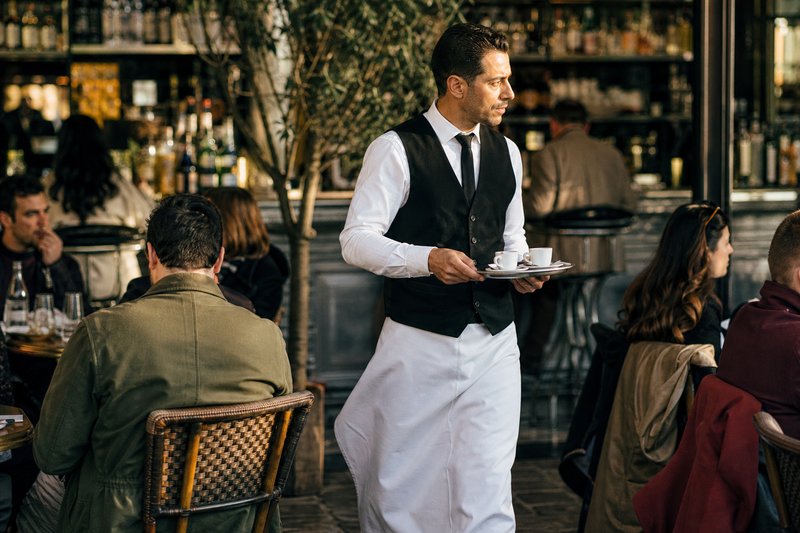
French coffee is a paradox you can taste in one sip: the country that perfected the café spent a century serving mediocre coffee inside it, and almost nobody minded. Understanding why explains most of how Paris drinks today, including the strangest part, which is that the city now runs two parallel coffee cultures that barely acknowledge each other’s existence.
The café came first, the coffee second
The French café was never primarily a beverage business, which is the key to everything. From Le Procope in 1686 onward it operated as infrastructure: public living room, debating chamber, the office for people without offices. What mattered was the right to sit, for an hour or an afternoon, with something small and affordable in front of you.
The espresso became that something, and its job description explains its quality. It needed to be cheap, fast and endlessly reorderable, and for that role a heavily roasted robusta blend at the lowest workable price was rational engineering rather than negligence. The cup was often bitter because the cup was never the point of the transaction.
Judge the old system by its own metric, hours of civilized loitering per euro, and it remains one of the great bargains in European life. The visitor who complains about the espresso while occupying a prime terrace chair for two hours has, in the café’s own accounting, already received and consumed the actual product without noticing.
The price of a chair
The culture’s most elegant machinery hides in plain sight on the mandatory price board: positional pricing. The same café legally charges three tariffs for the same espresso, lowest standing at the counter, higher at an indoor table, highest out on the terrace. You are not paying for coffee; you are renting a coordinate in the room.
That structure funds the culture’s one iron contract. Once you have paid the terrace rate, the seat is yours indefinitely: no refills expected, no table-flipping, no bill until you ask for it. The counter regular finishing in ninety seconds and the terrace philosopher holding one crème for two hours both get exactly the deal they chose.
The terrace piece unpacks that treaty in full, but its spirit fits in a sentence: the café monetizes patience honestly. Very few hospitality systems anywhere let the customer choose their own price-to-time ratio this cleanly, which is why the model has survived every economic cycle since Haussmann rebuilt the boulevards around it.
The vocabulary is the culture
Order “un café” anywhere in France and you receive an espresso, small and black with sugar on the saucer. Everything else needs its name: noisette for the espresso with a dash of milk, crème for the morning milk drink, allongé for the stretched version. The full decoder lives in our ordering guide, one habit per line.
The deeper point is that the vocabulary encodes a schedule. Milk belongs to the morning, the afternoon drinks black, and the after-dinner order is un café without exception. No law enforces any of this; it is simply known, transmitted by example, and visible in every café the moment you start watching what the locals actually order.
The sugar cube and the glass of water
Two small props complete the classic service. The wrapped sugar cube on the saucer is standard issue, and half the country uses it without apology, dunked or stirred, whatever the specialty baristas think. The small glass of water alongside, once automatic, now often needs asking for, but any café worth its zinc still provides it instantly and free.
2011 and the second culture
Then the ceiling finally moved. Around 2011 and 2012, a first generation of specialty roasters and cafés, Coutume and Ten Belles at the front with La Caféothèque before them, imported the barista culture Paris had ignored while Melbourne and London built it. Fifteen years later the results are visible in the best coffee shops in Paris.
What never happened was a takeover, and this is the genuinely French part. The corner café kept its bitter little espresso, its zinc, its positional pricing and its unbeatable core product, the seat. The two systems settled into a truce: the coffee shop owns the cup, the café owns the afternoon, and most Parisians under forty use both daily.
The visitor’s version of that truce fits on a saucer. Drink where the coffee is good, sit where the street is good, and never confuse the two jobs, because the city stopped confusing them years ago. One culture sells extraction and closes at six; the other sells time and closes after midnight. Paris, being Paris, decided to keep both.
Frequently Asked Questions
What is French coffee culture?
A system built around the café as public living room: small strong coffees, long sitting rights, waiter service, and a price structure that charges for the seat rather than the cup. The coffee itself stayed historically secondary to the institution serving it, which explains most of what confuses visitors at the counter on their first morning.
Why is café coffee in France often bitter?
Decades of robusta-heavy blends, dark roasting and espresso machines cleaned on an optimistic schedule produced the famous bitterness. It was a price-driven engineering choice rather than a taste ideology, keeping the endlessly reordered little cup cheap. That legacy floor is exactly what the specialty wave that began around 2011 has spent fifteen years correcting.
What is the difference between un café and an espresso?
Nothing at all: un café in France simply is an espresso, small and black, served with sugar on the saucer and a glass of water if you ask. Anything larger, longer or milkier requires its own name at the counter, which is why learning half a dozen ordering words pays off immediately anywhere in the country.
Why does coffee cost more on the terrace?
French cafés price by position: counter, indoor table and terrace form ascending tiers, each buying more real estate and more service. The system is codified on the mandatory price board by the till, perfectly legal and surprisingly honest once you know to read for it. You rent a coordinate in the room, not just a beverage.
Do the French drink coffee after dinner?
Yes, and strictly black: un café, never a cappuccino, closes a French dinner. Milk after noon remains one of the culture's few genuinely enforced taboos, policed by raised eyebrows rather than rules. Nobody will refuse the order, but the kitchen will register it, and regulars can feel the register happening from across the room.
Has specialty coffee changed Paris?
Substantially, at the ceiling. Since roasters like Coutume and cafés like Ten Belles arrived around 2011 and 2012, the city's best cups have risen to international standard, with home-grown roasting culture behind them. The classic café floor stayed roughly where it always was, and the two systems now run in parallel, serving different hours and needs.