
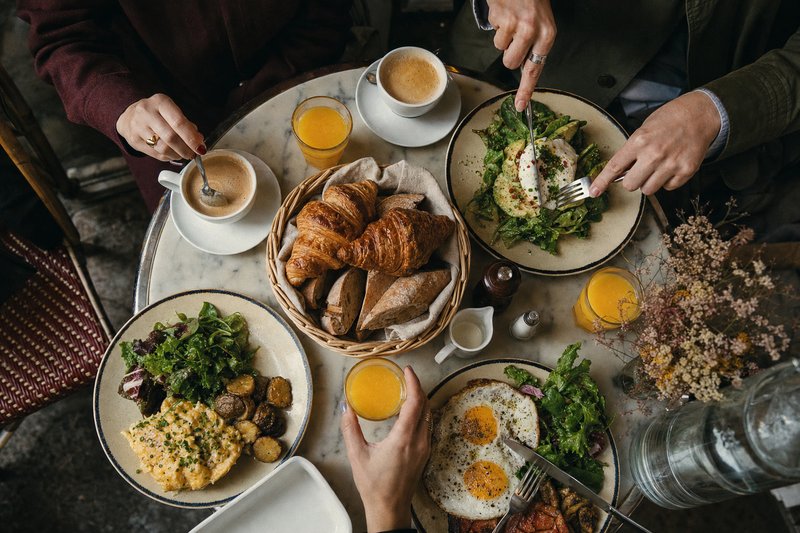
Brunch in Paris is a turf war between two philosophies. One imported the Anglo-Australian model wholesale, pancakes and flat whites and queues, and does it well enough that Melbourne expats approve. The other never stopped serving the grand petit déjeuner and simply let it drift toward noon, renaming nothing and apologizing for less.
The best spots in the city sit on both sides of that line, and knowing which side you are ordering from saves money, time and at least one Sunday queue every visit. This guide runs the whole field by brief rather than by ranking, starting on home turf in the Marais, where the density is highest anyway.
How brunch in Paris actually works
The weekend window runs 10:00 to about 15:00 on Saturdays and Sundays, and the city splits into three service models. Walk-in specialty spots run small rooms, no bookings and real queues by 11:30. Reservable tables cover the brasseries and hotels, while the market model means ordering from a stall and politely contesting a bench.
Prices as of 2026 stack simply: €18 to €30 at coffee-shop-style spots, €25 to €40 at the trendier Marais addresses, and under €15 for the classic café formula half this guide will try talking you into. One structural tip before the names: nearly every celebrated brunch kitchen serves the identical card on weekdays. Tuesday is the connoisseur's Sunday.
Brunch in the Marais: the home turf
Brunch in the Marais packs more weekend tables per block than anywhere else in the city, and four addresses cover every taste between them. Season in the Upper Marais runs the health-leaning end, avocado toast through matcha brioche, daily from 7:30, which makes it the rare famous name you can visit entirely without strategy.
Ob-La-Di does the compact twenty-seat, pomegranate-on-everything version, best approached as a pair rather than a crowd. Café Charlot holds the brasserie flank with eggs, tartines and a croque on the corner of Rue de Bretagne, the best people-watching of any brunch seat in Paris; the visiting guide covers its timing.
When a group cannot agree on any of that, the Marché des Enfants Rouges across the street settles the argument instantly: Moroccan, Japanese and Italian stalls under one roof standing since 1615, benches strictly first-come. Brunch in the Marais rewards the early riser without exception, because by 11:00 on a Sunday every one of these addresses carries a wait.
The best of the classic French formula
Now the contrarian case, argued sincerely. The best brunch in Paris, some weekends, is not brunch at all but the petit déjeuner complet a corner café has served since before the word arrived: croissant judged on lamination, tartine with salted butter, eggs if wanted, pressed juice and a crème, all under €15 with the terrace included.
Any good café delivers it without queue or ceremony, and the petit déjeuner guide ranks the details stop by stop. The formula's quiet superpower is time, since nobody flips a table that was never the product. Two hours, one newspaper and a second crème beat every eggs-Benedict in the city, and the neighbors already know it.
The spots worth a cross-town metro ride
Outside the Marais, three destinations justify the metro ride, each for a different reason. Holybelly near Canal Saint-Martin holds the pancake canon, bacon and bourbon butter from a kitchen that has run like a metronome for a decade. The Sunday queue is real and famous; the Tuesday queue does not exist.
Ralph's, in the courtyard of a 1683 hôtel particulier on Boulevard Saint-Germain, is the spectacle brunch: American plates at fashion prices in the prettiest garden retail ever built, anchoring the fashion-house café circuit. The specialty shops from the best-cafés guide, Ten Belles and KB and Coutume, run weekend service where the coffee outclasses everything here.
What the plates actually look like
A quick tour of the standard card, so the menus read faster on arrival. The Anglo school means pancakes or French toast, eggs Benedict in two variations, avocado toast with a rotating garnish economy, granola bowls, and a flat white culture imported intact from Melbourne. The French school answers with œufs, superior tartines and pressed juice.
Between them sits the hybrid card most Marais spots now run, where shakshuka shares a page with croque-madame and nobody blinks. Portion logic differs too: the imported plates arrive as a single filling event, while the French formula assumes a second order, which is why it looks cheaper and often ends costing the same.
Drinks are where budgets quietly die at every table. A fresh juice, a specialty coffee and a supplement or two add ten euros before anyone notices, which finances half the genre. The working discipline: order coffee first, food second, and juice only when the oranges are physically visible somewhere behind the counter. Menus reward that order of operations.
Seasonality matters more than the laminated photos suggest. Summer brunch moves to the terrace and simplifies: more fruit, more cold plates, shorter kitchens. Deep winter runs the reverse and honestly suits the indoor rooms better; a January Sunday at a steamed-up brasserie window, eggs arriving while rain audits the awning, is the version regulars quietly prefer.
Five briefs, five answers
To collapse the whole guide into a cheat sheet, one line per brief. Limited mornings and canonical plates: Holybelly, on a weekday. The scene and the people-watching with your eggs: Café Charlot's corner before 11:00. A health-leaning table serving daily without queues: Season. A date that needs to look effortless: Ob-La-Di, for two.
A group of six with three dietary positions and one budget objection goes to the Marché des Enfants Rouges, where the format absorbs everything. And the sixth brief nobody admits to, brunch without brunch culture, belongs to the petit déjeuner: same morning, same terrace, a third of the price, none of the queue theatre.
One caution earned the hard way deserves its own paragraph: beware any room advertising brunch seven days a week in four languages on a pavement sign. The great weekend tables in this city stay busy precisely because they do one service well, while the tourist-funnel versions do one service loudly. The chalkboard beats the banner, here as everywhere.
Prices, timing and queue strategy
Three rules cover ninety percent of cases. Arrive before 10:30 or after 13:30, because the wave between is where whole mornings die. Check whether the card runs weekdays, and go then when it does. Read the room's format before committing a group, since twenty-seat walk-in rooms are built for couples while brasseries absorb six without drama.
Two smaller levers help at the margins of the weekend brunch game. Solo diners jump most queues, because a single counter seat frees long before a four-top, making the book-and-bar-stool the most underrated format in the city. Weather works as a queue instrument too, since a grey forecast halves every terrace line within minutes.
The one queue this guide endorses without reservation is the early Sunday seat at a Marais terrace, coffee arriving exactly as the market opposite wheels its crates into position and the street assembles itself for the day. The indoor rooms will still be there when the rain comes. Some things remain worth showing up for, and this is one.
Frequently Asked Questions
Where is the best brunch in Paris?
For the pancake-and-eggs canon: Holybelly near Canal Saint-Martin, on a weekday if possible. For the Marais: Season and Ob-La-Di, with Café Charlot covering the brasserie version on a famous corner. For pure spectacle: Ralph's in Saint-Germain. There is no single best, only four different briefs, and this guide sorts the spots by which brief they answer.
What time is brunch in Paris?
The weekend window runs roughly 10:00 to 15:00 on Saturdays and Sundays, with peak pressure hitting between 11:30 and 13:30 when every famous room fills at once. Many specialty spots quietly serve the identical brunch card on weekdays too, which remains the single best queue-avoidance trick the city offers to anyone with a flexible calendar.
How much does brunch in Paris cost?
As of 2026, count on €18 to €30 per person at a coffee-shop-style spot for a main, a side and a drink, rising to €25 to €40 at the trendier Marais addresses and beyond that for hotel or fashion-house settings. The classic café petit déjeuner still lands under €15 and remains criminally underrated as a substitute.
Do Paris brunch spots take reservations?
The famous ones mostly refuse them: Holybelly and Ob-La-Di run strictly walk-in, which is precisely why their queues exist. Some Marais tables and virtually every hotel brunch will reserve, and the split defines your strategy. If a place takes bookings for Sunday noon, book it; if not, arrive early or simply go on Monday.
What is a traditional French brunch?
Strictly speaking there is none, because brunch arrived as an import. The native equivalent is the grand petit déjeuner: viennoiserie, tartines with butter and jam, eggs if wanted, fresh orange juice and a café crème. Many Paris cafés simply stretched that formula toward noon, renamed it brunch, and discovered the formula needed remarkably little stretching.
Where should you go for brunch in the Marais?
Season covers the health-leaning table and serves daily, Ob-La-Di does the compact twenty-seat version with the photogenic plates, and Café Charlot holds the corner-terrace brasserie flank opposite the market. When a group cannot agree on anything, the Marché des Enfants Rouges settles it instantly: Moroccan, Japanese and Italian counters under one roof solve committee indecision.
Is Holybelly worth the queue?
On a weekday, absolutely: the pancakes with bacon and bourbon butter earned their reputation the honest way, and the kitchen runs like a metronome. On a Sunday at noon the queue can eat an hour of your morning, and whether pancakes beat an hour of Paris is a personal theology question best answered with "go Tuesday".
What is bottomless brunch like in Paris?
It exists without being the city's strength, since the all-you-can-drink model arrived from London and mostly settled into hotel bars and a few party-brunch venues. Paris does the long, unhurried à-la-carte table far better than the two-hour mimosa clock, and visitors who insist on bottomless formats usually leave preferring the native version anyway.
Can you get brunch on a weekday in Paris?
Yes, and it is the professional move the queues never learn. Season serves its card daily from early morning, most specialty coffee shops run eggs and pancakes all week, and Café Charlot's continuous breakfast service functions as a weekday brunch from 7:00 onward. Saturday crowds are a choice rather than a requirement of the genre.
Which brunch spots in Paris are good for groups?
The Marché des Enfants Rouges leads, because everyone orders from a different stall and nobody compromises. Brasserie-format rooms like Café Charlot can push tables together on request, and the reservable hotel brunches absorb any headcount. The small-format specialty spots punish groups: Ob-La-Di seats about twenty people total, and six arrivals reshape the whole room.
What should you order at a classic café brunch?
Œufs however the kitchen does them best, plus a tartine beurrée, a croissant for judging the bakery relationship, fresh-pressed orange juice and a café crème. If croque-monsieur appears on the midday card, it outranks most eggs Benedict this city produces. Order the full spread once and you will understand why the formula never needed importing.
Is brunch in Paris vegetarian-friendly?
Increasingly so, and at the specialty generation almost by default: avocado toast, shakshuka-style eggs, granola bowls and halloumi plates fill half those cards without any meat involved. Classic brasseries run thinner on deliberate options, but an omelette, a green salad and the bread basket cover the basics anywhere, and kitchens accommodate requests without drama.
Where do fashion people do brunch in Paris?
Ralph's garden courtyard in Saint-Germain hosts the committed version, booked well ahead during the collections. Café Charlot's terrace serves as the fashion-week canteen scene, a role it has played for years, while the fashion-house cafés like Kitsuné and Lacoste handle coffee-and-pastry appearances rather than full plates. The journal's fashion-café guide maps that circuit.
What is the difference between brunch and petit déjeuner pricing?
Roughly double, all else equal. The petit déjeuner formula at a corner café runs €8 to €15, while the same café's weekend brunch formula climbs to €20 to €30 once eggs, sides and the longer table time enter the bill. You pay for the kitchen, the hour, and the right to hold the table until 14:00.
When should you arrive to beat the Sunday queues?
Before 10:30 at the walk-in spots, or after 13:30 once the first wave clears and the kitchens settle. At Café Charlot the terrace tips full around 11:00 on Sundays because the market opposite reaches full volume then, which is exactly why the earlier seat rewards the alarm clock. The middle window belongs to the patient.