
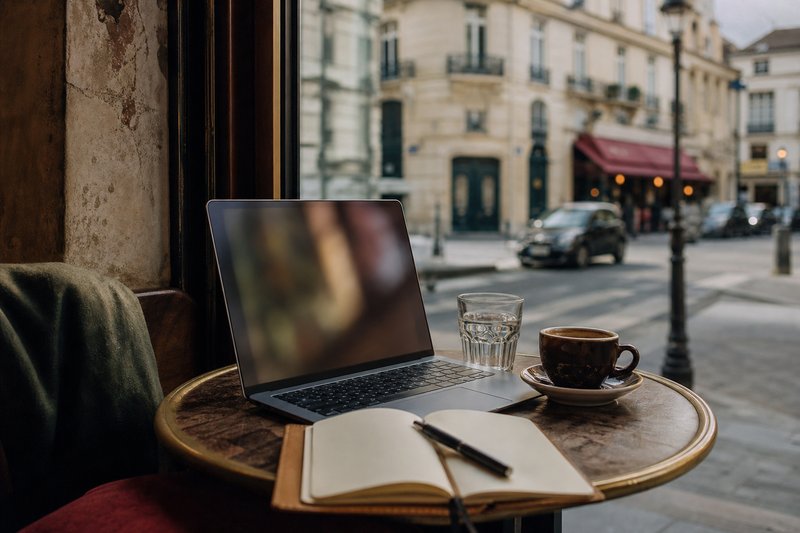
Paris invented working from cafés, as any nineteenth-century novelist could confirm, then spent a decade negotiating with the laptop version of the habit. The negotiation has settled into a workable system, but it is genuinely a system, with rules that differ by café type, by day of the week and even by table. Here is how it works in 2026.
Two models, two contracts
The classic café runs on the old terrace treaty: order roughly hourly and the table is yours until closing. Nobody at a brasserie has ever cared what you do at your seat, whether writing, reading or staring, and a laptop is just modern staring. The constraints are physical rather than social, starting with the tiny marble tables.
The specialty coffee shop inverted that deal completely. Its product is the cup and the table turnover funding the roasting, so rooms run small and policies explicit: laptops fine on weekday mornings, restricted zones at busy hours, and increasingly a flat weekend screen ban. None of this is hostility; it is arithmetic in twelve-seat rooms.
Reading the room in ten seconds
The reliable signals, in descending order of certainty. Outlets visible along the banquette mean you are welcome, full stop. Posted signs about screens mean obey them, because they exist thanks to someone worse than you. A room under twenty seats at peak hour means order takeaway, and a sleepy back room at 15:00 means settle in gratefully.
That dead zone between services deserves special mention, because your custom is most appreciated exactly then. The French café system has always monetized its quiet hours this way, renting calm afternoons to students and letter-writers a century before anyone carried a screen. The laptop worker at 15:30 continues a tradition, not an imposition.
WiFi deserves its own honesty check before you commit to a corner. Coverage at classic cafés has become quietly good, password on the receipt, and the Café Charlot back room runs a dependable connection through the workday. A principled minority of specialty shops skips WiFi entirely to keep tables social, so the professional carries a hotspot and asks nothing.
The etiquette that keeps everyone welcome
Four habits cover the entire code. Order on the one-item-per-hour meter without waiting for reminders. Take the small table rather than the four-top when the room is filling around you. Keep calls out of the café entirely, because the video-meeting-on-terrace genre has single-handedly caused half the screen bans in this city.
And pack up during a rush you are not participating in, which is the gesture the staff actually remember. The system stays generous exactly as long as its users stay self-aware, a regulatory mechanism so perfectly French it needs no enforcement. Rooms police themselves through the mildest of glances, and the glances work better than any laminated policy ever has.
The gear that keeps you welcome
Small logistics buy outsized goodwill. A machine that holds its charge matters more here than anywhere, because outlet seats are the scarcest currency in the room and freeing one mid-session reads as diplomacy. A compact laptop fits the marble tables that have defeated many a sixteen-inch workstation, and headphones stay in the bag unless the room is loud.
Carry a paper notebook as the finishing touch, and not entirely as theatre. Nothing buys goodwill at a classic café like occasionally resembling its original customer, and the notebook works when the battery dies. The waiters notice these things, catalogue them silently, and adjust the warmth of the service accordingly over the weeks.
The weekday-Sunday split
Build the week around the two models and nothing goes wrong. Monday to Friday belongs to the specialty shops in the morning, all real coffee and working light and fellow laptops, then the brasserie dead zone through the afternoon. Weekends flip the map: the coffee shops reclaim their tables for brunch service, and the classic cafés absorb everyone displaced.
For full days there remains the third lane, the anticafés and coworking cafés where you pay by the hour with drinks included. An honest deal, and the right one past hour three. The café gave the world the portable office over two centuries; the least the portable office can do in return is keep buying the coffee.
Frequently Asked Questions
Can you work on a laptop in a Paris café?
Yes, within a two-part system. Classic cafés tolerate laptops indefinitely as long as you keep ordering something roughly every hour, while specialty coffee shops welcome screens on weekdays and often restrict them at weekends or at peak tables. Reading the room before unpacking is the whole skill, and it takes about ten seconds.
Which cafés in Paris are laptop-friendly?
The roomier specialty shops on weekday mornings, and almost any classic brasserie during off-peak hours, with Café Charlot's back room a dependable example of the latter. Small famous rooms with a handful of tables are the wrong choice at any hour, because a laptop there occupies a meaningful percentage of the entire business.
Is café WiFi in Paris good?
Uneven but improving steadily. Classic cafés increasingly run perfectly fine connections, with the password printed on the receipt as the standard delivery method, while a principled minority of specialty shops skip WiFi entirely to keep their tables conversational. Anyone whose work genuinely depends on bandwidth should carry a phone hotspot as the quiet backup.
What should you order while working?
Roughly one item per hour: a coffee first, then water or juice, then something from the kitchen if the session stretches past two hours. The unwritten meter is generous and nobody announces it, but it does run. Matching it without being reminded is what separates the welcome regular from the tolerated squatter in every room.
Are there weekend laptop bans?
At many specialty coffee shops, yes: brunch hours are their revenue peak, and open screens hold small tables far too long for the arithmetic to survive. Saturday and Sunday therefore belong to the classic café model, which never minded a long sitter. Signs announce the policy where it exists; obey them without negotiation.
What about coworking cafés?
Paris runs a healthy layer of pay-per-hour anticafés and coworking cafés where the deal is explicit: you pay for time and the drinks flow included. For full working days they honestly beat stretching the etiquette of a normal café, and past hour three even the friendliest brasserie table starts feeling borrowed rather than rented.